Verified from the available record
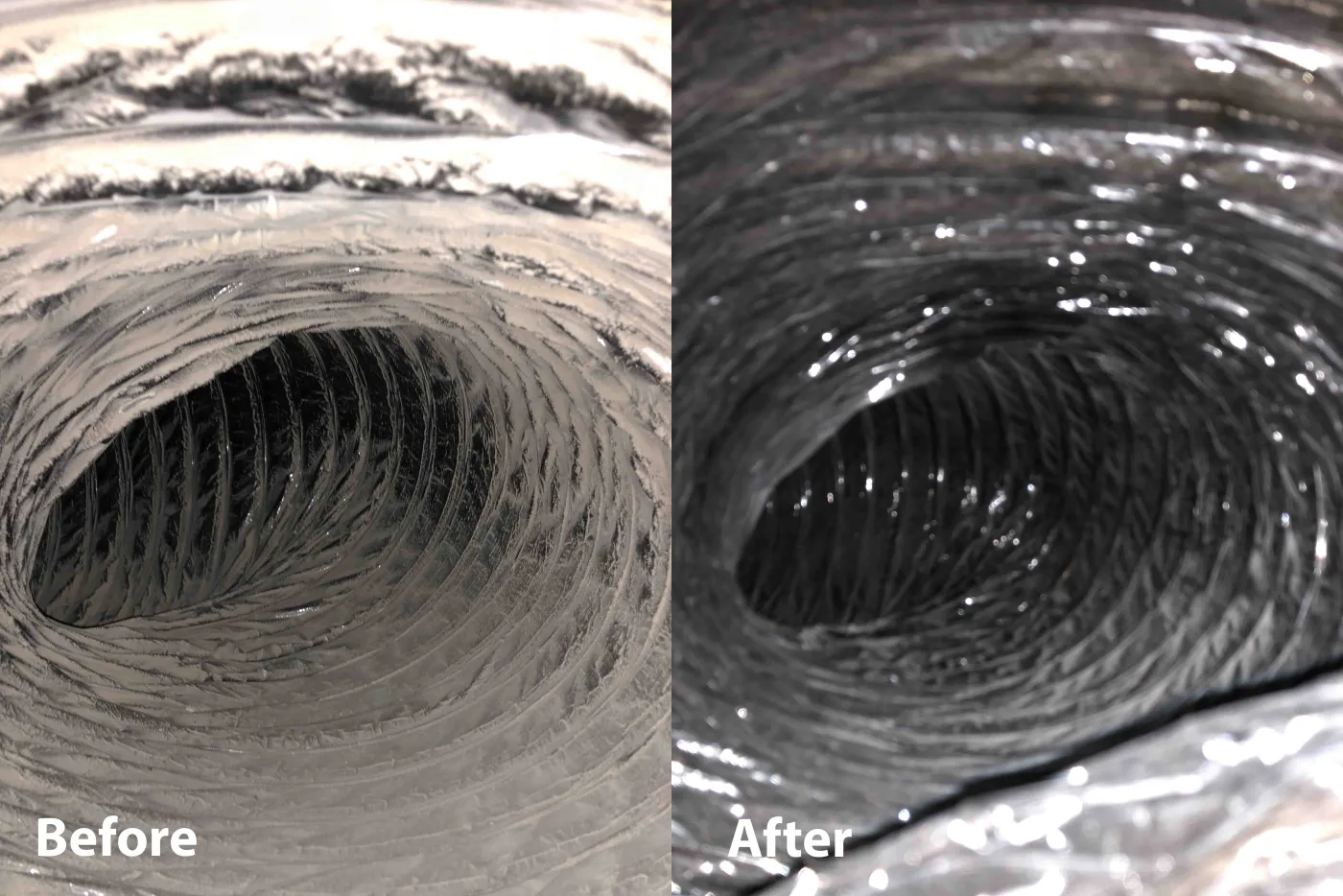
- The image is published in the Zarts air duct cleaning gallery as a before-and-after comparison.
- The photographed component has the visual characteristics of flexible HVAC duct.
- Visible surface buildup is reduced in the comparison view.
Not established by this record
- Customer, property type, city, service date, and job-record identifier
- The complete HVAC system layout and the condition of sections outside the frame
- Tool pressure, airflow readings, cleaning duration, or customer-reported outcome
What the photograph supports
The strongest conclusion is narrow: the paired photograph documents a visible change on an accessible flexible-duct surface. Material present in the first view is visibly reduced in the second. The comparison is useful because it focuses on the same type of component and allows the viewer to see the liner rather than only a cleaned room-side register cover.
The image does not establish that every supply branch, return duct, plenum, blower compartment, or coil area was cleaned. It also does not demonstrate a change in indoor air quality, health, comfort, energy use, or system performance. Those outcomes require other evidence and may be influenced by conditions outside the duct surface shown.
Why flexible duct changes the service approach
Flexible duct typically uses a thin inner liner supported by a wire helix and surrounded by insulation and an outer jacket. The liner is not equivalent to bare sheet metal. Tool choice, contact, access, and the existing condition of the material matter because damaged, brittle, collapsed, disconnected, or poorly supported duct may need repair rather than aggressive cleaning.
A professional scope should identify the duct material before work begins and explain how loosened material will be captured. Zarts describes its standard residential approach as compressed-air agitation paired with negative-pressure collection, but this public image alone does not document the exact equipment or settings used on this particular job.
What would convert this into a full case study
A publishable case study would add a verified service date, a broad approved location, the property and HVAC-system type, the customer-reported reason for the visit, inspection findings, the agreed scope, the method actually used, and any access limitations. The original photographs should be tied to the work record, and publication permission should be documented when a customer or private property could be identified.
Until that record is available, this page remains a visual field note. That label is intentional: it lets homeowners learn from a real comparison without suggesting facts that are not contained in the evidence.
Evidence and editorial standard
Zarts uses genuine service images, component-specific descriptions, and documented service procedures. A full case study is published only when the job record supports the property context, observed condition, completed scope, method, result, photo relationship, and any customer quote or permission. Images are not assigned to a city without a supporting service record.