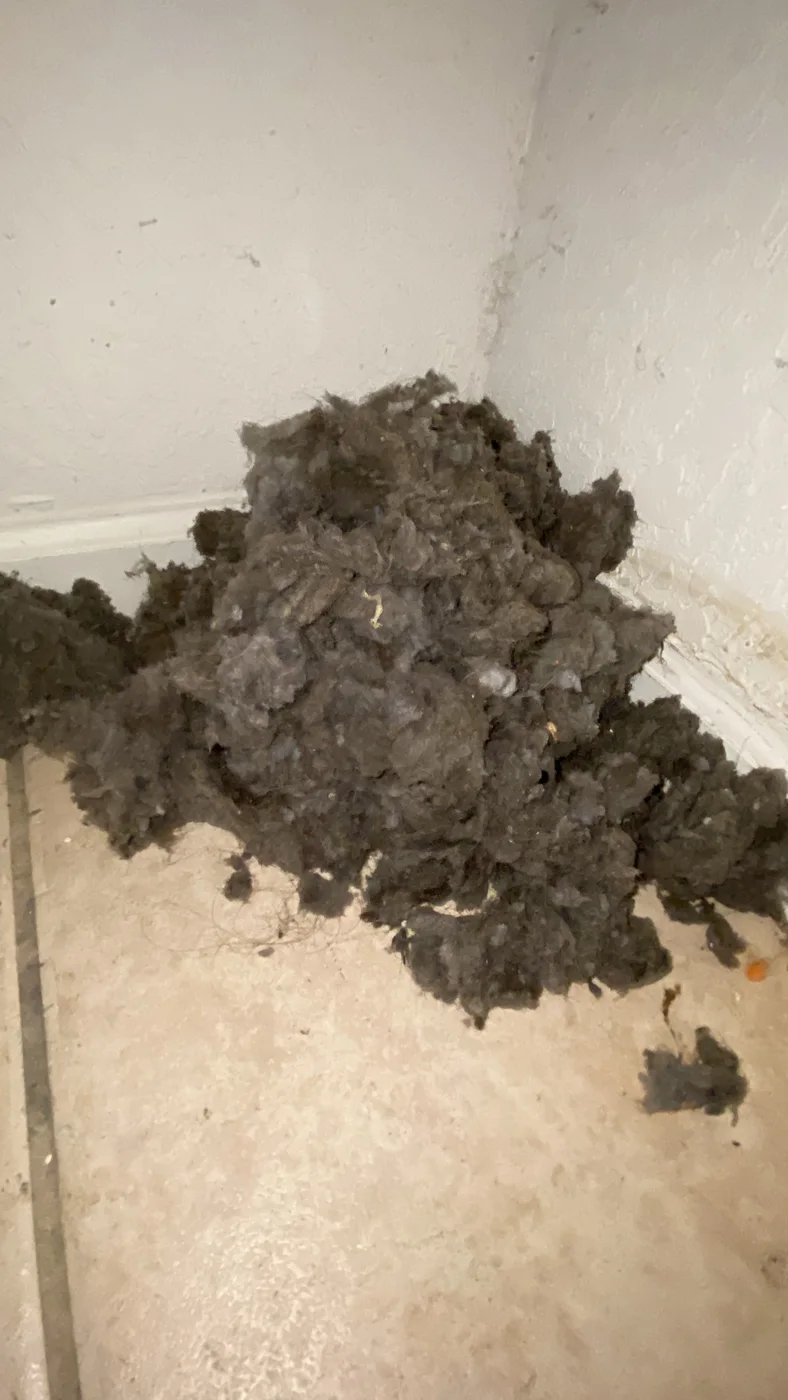
Dryer vent service in a condominium often involves more coordination than the same work in a single-family home. The dryer may sit in a narrow closet, connect behind a stacked laundry unit, and exhaust through a long concealed route to an upper wall or roof. The vent may serve only that unit even though portions of the duct or termination pass through common property. Building designs and governing documents vary, so nobody should assume that every condo uses a shared exhaust or that every resident controls the exterior outlet. Confirming the route and responsibility before the appointment prevents incomplete work and avoidable delays.
Start by identifying the vent route
Ask where the dryer connects and where the exhaust is believed to terminate. Helpful records may include unit plans, maintenance notes, roof maps, prior invoices, or labels near the laundry connection. Do not assume that the closest exterior grille belongs to the unit; multifamily facades can contain bathroom, kitchen, and dryer exhausts near one another. A technician may be able to trace the route using airflow, visual access, or building information, but concealed construction can limit certainty. The plan should distinguish confirmed facts from assumptions: dedicated duct or unknown, wall or roof termination, accessible or restricted, and estimated route only when it has not been verified.
Clarify who controls each access point
The resident usually controls entry to the unit, but the association or building manager may control the roof, exterior facade, mechanical spaces, parking levels, and service keys. Governing documents can assign maintenance responsibilities differently from one property to another. Before scheduling, ask whether a certificate of insurance, vendor registration, escort, reserved elevator, loading area, or roof-access appointment is needed. These are operational requirements, not signs that a vent is unusually problematic. A few minutes of coordination can determine whether the technician is able to reach the termination and complete the intended scope in one visit rather than cleaning only from the laundry room and leaving the final outlet unverified.
Plan for stacked units and compact laundry closets
Many condominium dryers are stacked above a washer or installed in a closet with limited side clearance. Accessing the transition duct may require moving substantial equipment while protecting water hoses, drain lines, electrical connections, a gas connection where present, flooring, doors, and cabinetry. Residents should describe the configuration accurately when requesting service and avoid assuming that every vent-cleaning company moves stacked appliances. If the connector cannot be reached safely within the agreed scope, the service may need coordination with an appliance installer or maintenance team. The report should note that limitation because a concealed crushed connector can affect airflow even after the main duct has been cleaned.
Long and vertical runs need complete, not dramatic, descriptions
Condo exhaust routes may rise several stories, cross a ceiling, or include multiple changes in direction. Those features can influence tool selection, access planning, and interpretation of airflow, but they do not prove that a vent is clogged or improperly built. The technician should document known bends, approximate route, cleaning direction, and any section that could not be reached. Vertical systems may release a significant amount of lint when disturbed, so collection and protection at the working end matter. If the termination is on the roof, coordinate safe access rather than claiming the cap was cleared based solely on indoor work. Specific observations are more useful than blanket warnings about all high-rise or vertical vents.
Use airflow and termination checks as documented evidence
When access allows, a before-and-after airflow comparison can help show whether the tested system changed after cleaning. Keep the dryer, cycle, measurement point, and method consistent, and record whether the exterior damper was observed. A stronger reading after lint removal supports an improvement under those conditions; it does not certify concealed joints or predict future buildup. If the outlet cannot be reached, say so plainly. Building managers may benefit from a unit-by-unit record that lists the date, appliance location, termination identification, access limitations, photographs, and recommended follow-up. Consistent records help distinguish recurring issues in one unit from a broader access or termination concern without inventing conclusions.
Questions residents and managers should settle before service
Confirm whether the appointment covers one unit or a coordinated group, who will provide entry, and whether the technician may access the roof or facade. Ask whether the dryer is stacked, whether it is gas or electric, whether the appliance can be moved, and whether the association has approved work hours. Identify pets, occupied bedrooms, alarms, or finishes that need protection. Share any vent warning, long-dry-time pattern, recent appliance replacement, or prior report, but avoid treating those details as proof of a clog. Finally, decide who receives the service documentation. When residents, managers, and technicians agree on scope before work begins, the resulting report is clearer and follow-up responsibilities are easier to assign.
Planning dryer vent service for a condo?
Tell Zarts whether the laundry is stacked, where the vent is believed to terminate, and what building access is available. We can define the service scope before arrival and document the portions actually reached.
Sources and further reading
These primary sources support the general consumer and system information in this guide. They do not endorse Zarts or replace evaluation of a specific home.