How air moves through a forced-air system
A central forced-air system operates as a loop. The blower draws indoor air through one or more return openings, moves that air across the system’s heating or cooling components, and sends conditioned air back to the rooms through the supply side. The filter is normally positioned somewhere along the return path so air passes through it before reaching sensitive equipment, although the exact arrangement varies by system.
Because supply and return components perform opposite jobs, a concern at one opening does not automatically describe conditions throughout the system. A dusty return grille may be collecting particles from room air, while debris inside a supply boot may have entered during construction or a past project. Inspection is needed before those observations are turned into a cleaning recommendation.
Supply registers, diffusers, and boots
A supply register is the visible cover at a floor, wall, or ceiling opening that delivers conditioned air. Registers usually have louvers or a damper that can redirect or reduce airflow. A diffuser is another type of supply outlet designed to spread air in a particular pattern. Behind either cover is a metal or insulated fitting commonly called a boot, which connects the room opening to a branch duct.
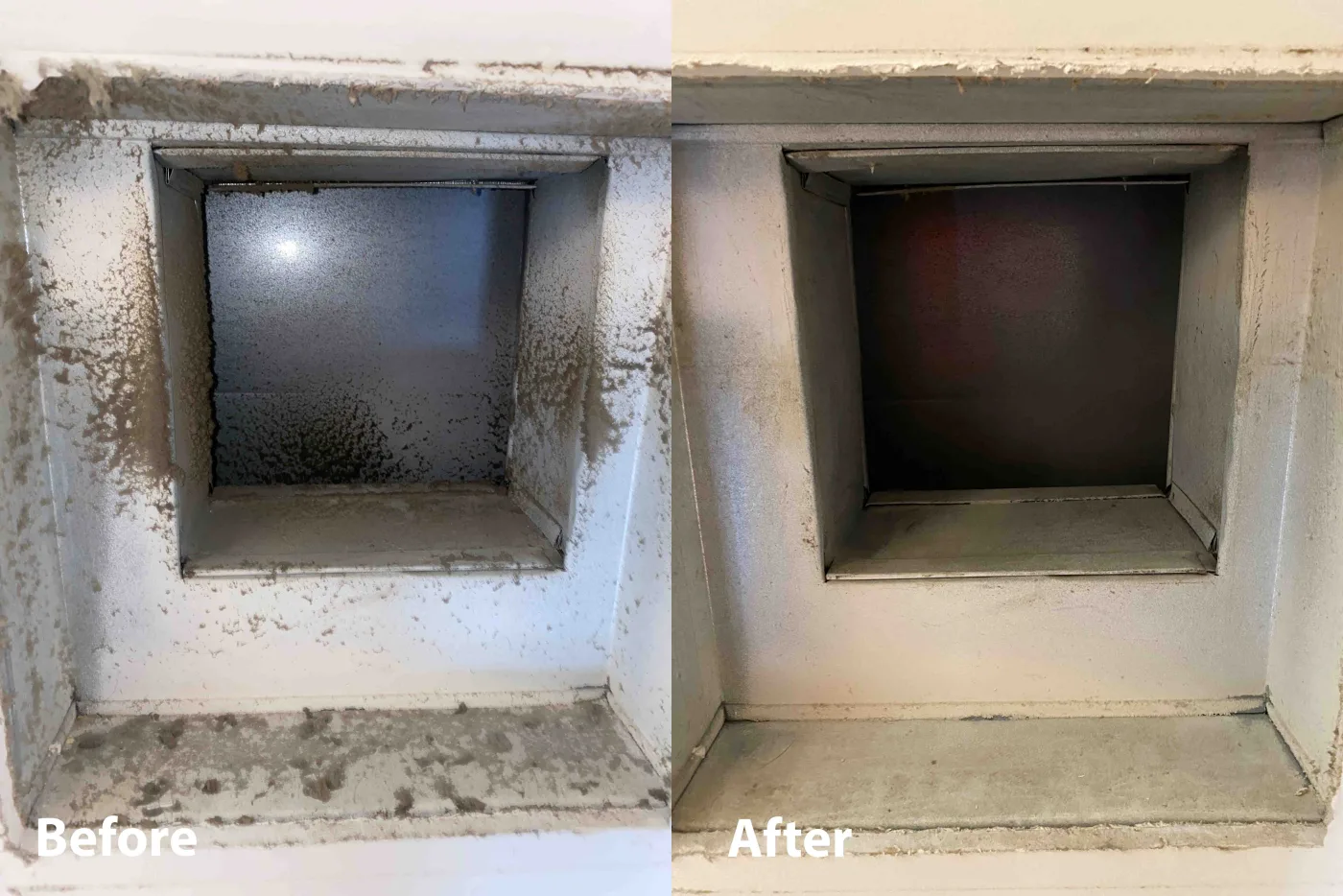
Cleaning the removable cover addresses only the visible surface. If debris is present behind it, the boot and accessible branch section may also require attention. Covers should be removed carefully, cleaned separately when included, and reinstalled without damaging paint, fasteners, flooring, or the seal around the opening.
Return grilles and the return-air path
A return grille covers an opening where room air enters the HVAC system. Some homes have one central return; others have several returns or dedicated returns for individual rooms. A filter may sit directly behind a return grille, inside a filter cabinet near the air handler, or in another manufacturer-approved location. Furniture, rugs, and stored items should not obstruct these openings.
Return grilles often show dust sooner than supply registers because air and airborne particles are continually being pulled toward them. That visible pattern can be normal surface accumulation. The more useful questions are whether the filter fits properly, whether air can bypass it, and whether accessible return ducts contain substantial deposits rather than a light, adhered film.
Branches, trunks, and plenums
Branch ducts connect individual room openings to larger supply or return pathways. A trunk is a main duct that serves several branches. A plenum is a chamber where air is collected or distributed near the HVAC equipment. Residential systems may combine sheet metal, flexible duct, fiberglass duct board, internally lined sections, and factory-built equipment cabinets.
These components are not equally accessible. Attic layout, duct material, insulation, dampers, tight turns, and the number of systems all affect where inspection and cleaning tools can be used safely. An accurate quote therefore requires more than counting visible vent covers; it also requires understanding the system layout and the agreed service boundaries.
What visible dust can and cannot tell you
A small amount of dust on a register or grille is not proof of heavy contamination inside the ducts. The U.S. Environmental Protection Agency notes that return registers commonly become dusty as room air is drawn through them. Covers can often be cleaned as ordinary housekeeping without assuming that a full system cleaning is warranted.
Further inspection may make sense when substantial deposits are visible inside accessible ductwork, debris is released from supply openings, or renovation material is present beyond the cover. Odors, weak airflow, and comfort differences can also originate from filters, duct leakage, equipment, drainage, or design issues, so those symptoms should not be assigned to dirty ducts without checking other causes.
How to define a clear cleaning scope
Before work starts, the homeowner and service provider should use the same component names and agree on what is included. The scope may identify supply registers, return grilles, accessible supply and return ducts, plenums, and specific accessible equipment surfaces. It should also explain access points, the collection method, the agitation method, and any sections that cannot be reached without repair or alteration.
Ask for findings to be described by component instead of relying on a broad statement that “the vents are dirty.” A component-by-component explanation makes before-and-after documentation more meaningful and helps separate cleaning from duct repair, air sealing, equipment maintenance, filter correction, or moisture-source work that may require a different service.
Need help evaluating your system?
Call or text Zarts with your property details and the condition you are seeing. We will explain the likely scope and any access information needed for a clear quote.
Sources and further reading
These primary sources support the general consumer and system information in this guide. They do not endorse Zarts or replace evaluation of a specific home.