Verified from the available record
- The comparison is part of the Zarts public air duct cleaning photo library.
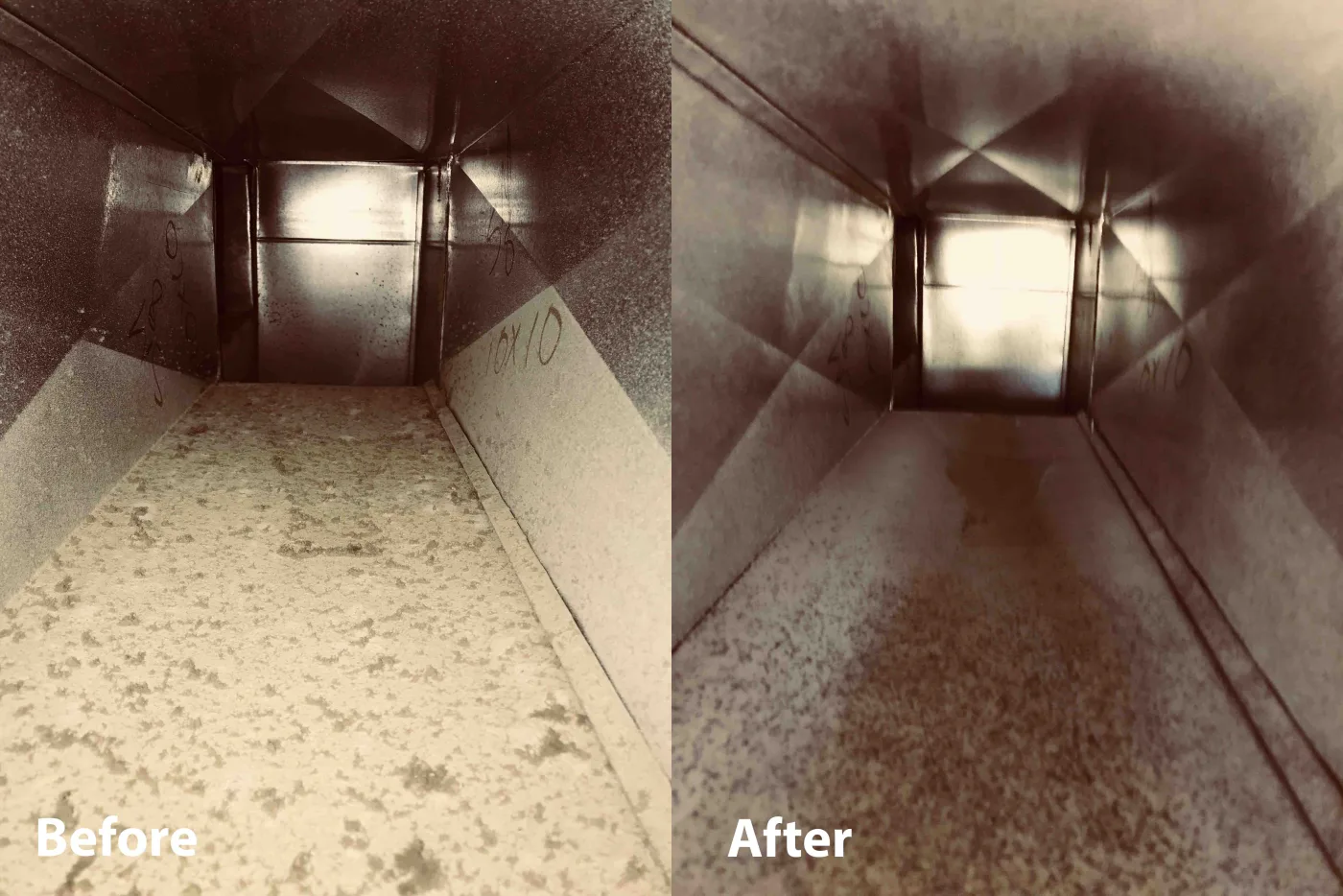
- The photographed surface is a rectangular metal duct section.
- The side and upper surfaces appear less coated in the paired view, while visible material remains along the lower surface.
Not established by this record
- Customer, city, building type, service date, and original work-order number
- Whether the photographed section is supply, return, trunk, branch, or another fitting
- Measurements, customer outcome, cleaning duration, and conditions elsewhere in the system
Reading the visible result accurately
The side and upper surfaces appear less coated in the After view, while visible material remains along the lower surface. Because exposure and color differ, the photograph supports a limited observation about surface appearance—not a quantified removal claim.
Camera position and lighting still matter. A responsible comparison avoids turning contrast or flash into a cleanliness claim. It also avoids phrases such as “completely sanitized,” “mold-free,” or “the whole system is clean,” none of which can be established by this photograph.
How metal duct differs from other materials
Bare sheet metal generally presents a firmer surface than a flexible inner liner or exposed fiberglass. Even so, the system may contain sealed joints, insulation, dampers, turning vanes, liners, tight transitions, or inaccessible branches that change the service plan. The presence of metal in one photograph does not establish that the entire system uses the same material.
A clear proposal should distinguish room-side covers, boots, branch ducts, trunks, returns, and plenums. It should also explain where negative-pressure collection will be connected, how visible debris will be agitated, and which sections cannot be accessed safely.
The additional evidence a case study needs
A complete case study would connect this image to a verified job record. That record would identify the broad approved location, property type, system count, reason for service, observed condition, work completed, equipment actually used, limitations, and the visible or measured result. If a customer statement were included, it would be quoted accurately, attributed to the correct platform, and separated from the company’s own findings.
Without those elements, adding a city name or performance result would create confidence that the available evidence does not support. Zarts publishes this as a field note so the distinction stays visible to homeowners and search engines alike.
Evidence and editorial standard
Zarts uses genuine service images, component-specific descriptions, and documented service procedures. A full case study is published only when the job record supports the property context, observed condition, completed scope, method, result, photo relationship, and any customer quote or permission. Images are not assigned to a city without a supporting service record.