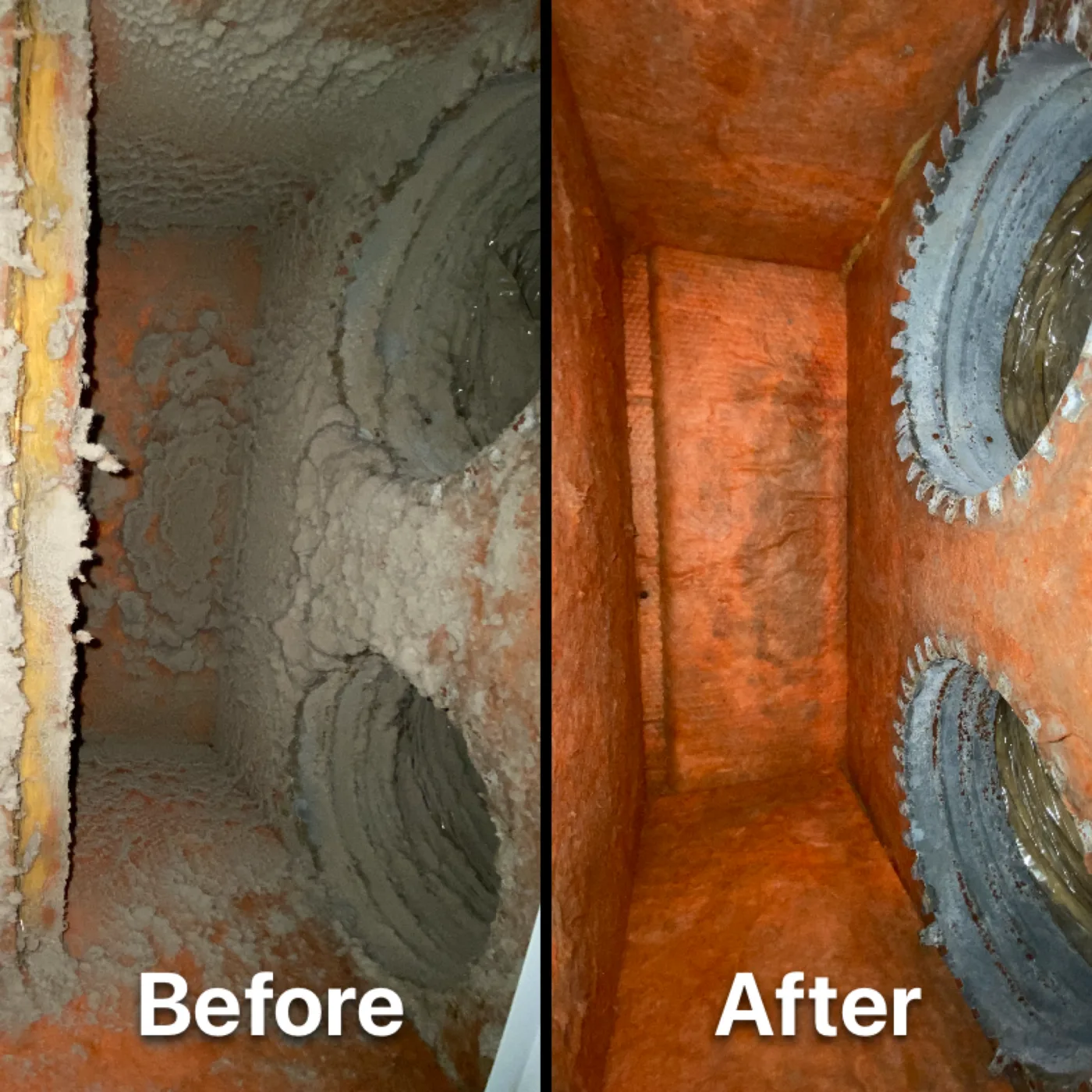
A quote may call the same visible box a supply plenum, return box, or duct board section. Those words answer different questions: where the air travels, what the component does, and what it is made from. Start by asking the technician to point to the actual box on your system. Then match the proposed work to that component.
Ductwork, duct board, and plenum: three useful terms
Ductwork carries air between the HVAC equipment and the rooms. Supply ducts deliver conditioned air, while return paths bring room air back to the equipment. A plenum is a larger chamber where air collects or is distributed. A supply plenum may have several round branch connections; a return box may connect a grille or return duct to the air handler.
Fiberglass duct board describes a construction material. A plenum can be fabricated from duct board, but it can also be made from metal. Likewise, duct board can form a longer rectangular duct rather than just the box near the equipment. One home can combine a duct board plenum, flexible branches, and metal boots at the room openings.
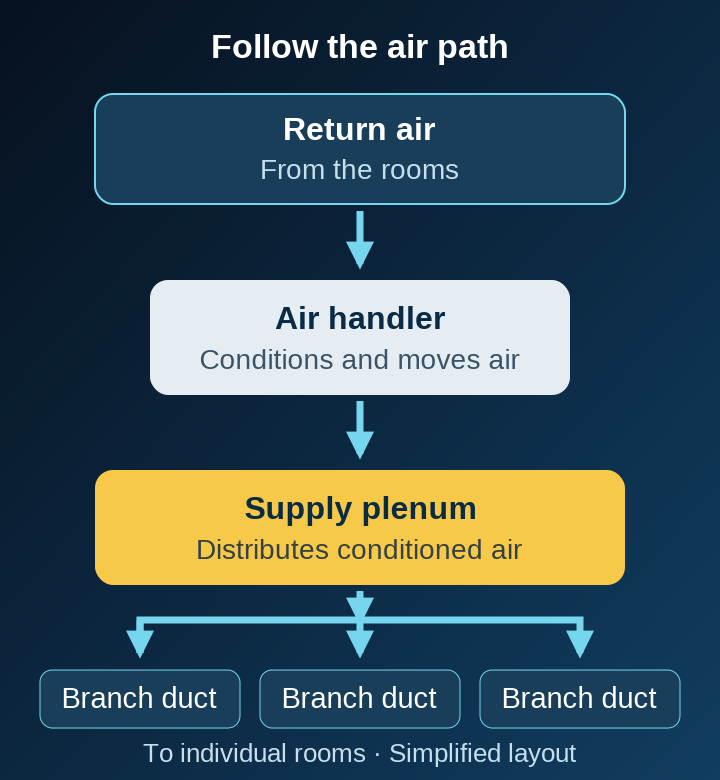
What is inside a fiberglass duct board panel?
Duct board is a rigid panel of bonded glass fibers that can be cut and assembled into rectangular air passages. The board itself provides insulation. A reinforced foil facing covers the outside, while the inside is the surface exposed to the moving air. Joints and connections need an appropriate closure system.
Interior finishes vary by product and age. For example, Johns Manville Micro-Aire uses a black glass mat on the airstream side and a foil-scrim-kraft exterior. Other products have different surface treatments. An orange, yellow, or dark interior in a photograph cannot reliably identify the manufacturer, age, or condition. Ask for accessible product markings or installation records when those details matter.
How it differs from wrapped metal and flexible duct
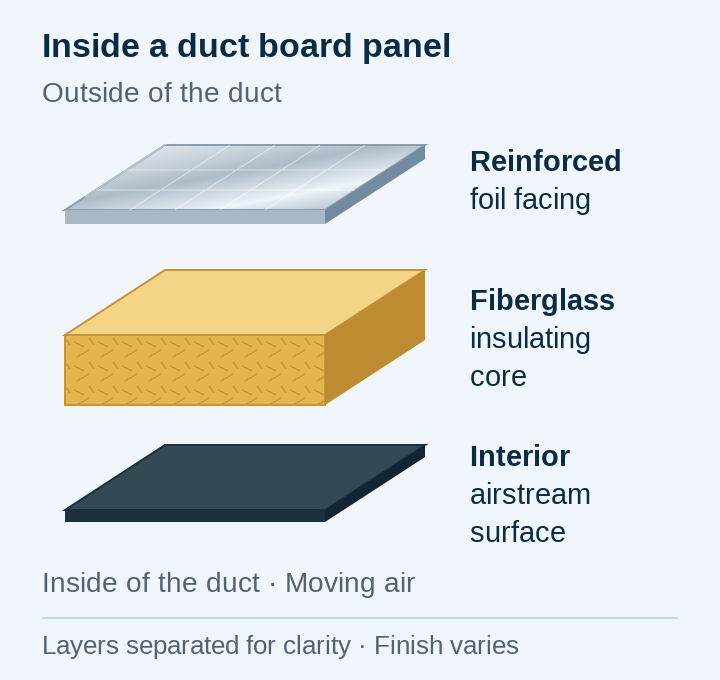
A silver exterior is a clue about the facing, not proof of the underlying structure. Sheet-metal ducts can have insulation wrapped around the outside. Other metal ducts have fiberglass lining inside. Flexible ducts have a thin inner air passage supported by a wire helix, with insulation and an outer jacket around it. These constructions need different handling.
Ask the technician to describe the wall from the air passage outward. Is the duct wall board, or is it metal with added insulation? Is the visible fiberglass an intended lining or a damaged edge? Existing openings may help answer these questions. Avoid peeling the foil, poking the lining, or cutting a hole just to identify it; the air barrier and insulation need to remain intact.
Can a fiberglass box be cleaned?
An intact, dry section with removable deposits may be a cleaning candidate after inspection. NAIMA guidance covers contact vacuuming, air washing, and brushing methods for insulated ducts, with attention to protecting the surface and restoring openings. The appropriate method depends on the material, condition, access, and manufacturer instructions. A technique used on bare metal does not automatically suit a fibrous surface.
Ask how the provider will collect loosened debris, protect the interior facing, and close service openings. EPA guidance calls for soft-bristled brushes on fiberglass duct board and fiberglass-lined metal. A worn facing or loose fibers should prompt evaluation before further agitation. A cleaning proposal should name the accessible plenum and branches included, along with any sections that cannot be reached.
When moisture or damage changes the plan
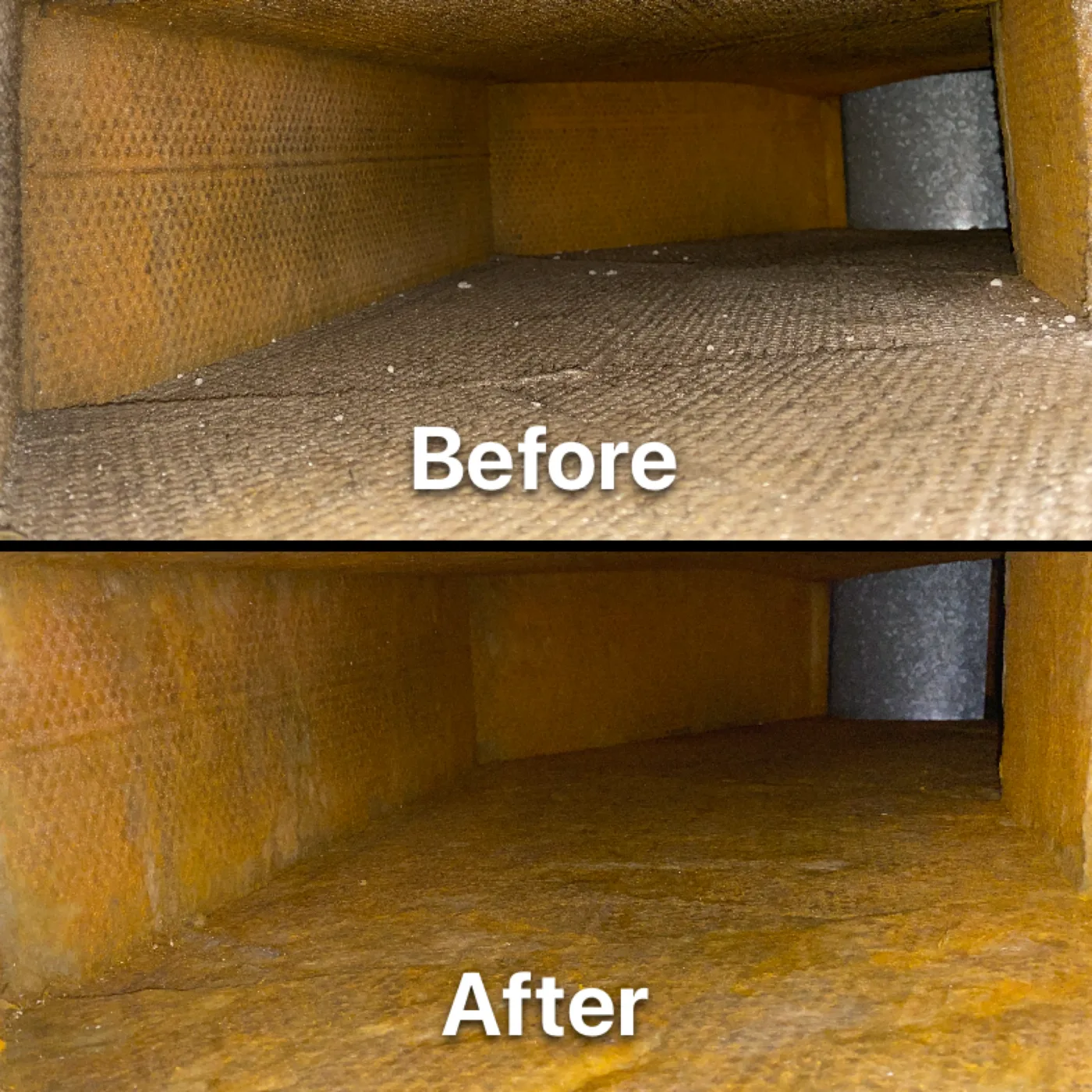
EPA recommends replacing wet or mold-contaminated fiberglass duct material. Cleaning does not fix the source of wetting or restore damaged insulation. Steam and other wet cleaning methods are unsuitable for ductwork. A dark patch alone does not establish mold; have the condition evaluated rather than diagnosing it from a photo.
A crushed wall, separating facing, open joint, or damaged connection also deserves a repair assessment. Ask the contractor to show where the defect starts and ends and explain whether a local repair or replacement section is proposed. The new work needs to preserve the air passage, insulation, connections, and access for future service. Specify this work separately from deposit removal.
Will cleaning the box fix a warm room?
A warm room can involve an air-delivery problem: a leaking connection, kinked flexible branch, damaged insulation, or another system issue. ENERGY STAR identifies duct leakage and poor connections as causes of lost conditioned air and comfort problems. Removing surface dust does not reconnect a branch or seal a failed joint.
For uneven cooling, describe the affected room and when the problem occurs. Ask an HVAC contractor to evaluate the duct route, connections, and airflow before attributing the symptom to dirt inside the box. A written quote can distinguish cleaning from duct repair, sealing, insulation work, and any equipment or airflow investigation. Each addresses a different finding.
What to send when asking about your box
Start with a wide photo showing the air handler and the box, then an exterior close-up of the connections or visible damage. If an existing opening already provides a safe view, an interior photo can help explain the question. A photo is a starting point; it cannot confirm the condition of hidden surfaces or replace an inspection.
- Say whether the concern is visible dust, moisture, damaged material, an odor, or uneven cooling.
- Include the property location, number of systems, and any access restrictions.
- Ask which components are included and how their condition affects the proposed work.
- Request comparable before-and-after views of the accessible surfaces and a record of unresolved findings.
Have a question about the box beside your air handler?
Send Zarts a wide photo, an accessible close-up, and your property location. We can discuss the cleaning scope and explain when an HVAC contractor should evaluate moisture, insulation, connections, or replacement.
Sources and further reading
These primary sources support the general consumer and system information in this guide. They do not endorse Zarts or replace evaluation of a specific home.